Photo courtesy of Crested Butte Land Trust
Balancing recreation, conservation and community
On any given summer day in the Crested Butte, people walk dogs on Lower Loop, bike Lupine, float the Slate River or simply sit quietly with a view.
Much of that access—often seamless, often unnoticed—is made possible by the Crested Butte Land Trust (CBLT), an organization working at the intersection of recreation, conservation and community collaboration.
“It’s a balancing act,” said CBLT Stewardship Director Jon Mugglestone.
Recreation certainly draws people to Crested Butte, but it sits alongside agriculture, wildlife habitat, scenic values and water quality.
That balance is increasingly complex. CBLT estimates its fee-title and conserved properties support more than 100,000 recreators each year. Trails, rivers, Nordic routes and access points crisscross lands owned outright by CBLT, private lands protected by conservation easements, and public lands managed by towns, counties and federal agencies.
“Our trails are special because they allow a lot of multiuse, whether that be bikes or walkers or hikers or beach goers,” said Mars Charlebois, CBLT’s Recreation Lands Coordinator.
CBLT owns some properties and conserves others through easements. Each one has different rules, partnerships and management needs.
A major part of that work is understanding how people use the land. With support from MetRec grants, CBLT has expanded its recreation monitoring, installing trail counters and cameras, conducting surveys, and collecting long-term data on trail and river use. That helps guide everything from trailhead design to wildlife protection.
Monitoring plays a key role at heavily used access points like Gunsight Bridge. CBLT convened the Gunsight Bridge Committee, bringing together stakeholders like Crested Butte Mountain Bike Association, the Colorado Division of Mine Reclamation and Safety, Crested Butte Nordic, off-road users and agricultural families.
One big priority identified by the committee is to stabilize the road access down to the bridge. Currently, it’s eroding from spring runoff. The Division of Mine Reclamation and Safety needs that driving access to stem the flow of heavy metals from Daisy and Redwell mines into the Slate.
CBLT’s approach goes beyond numbers.
“We’re collecting community input on how these recreational resources are being used and what people want to see in the future,” Mugglestone said.
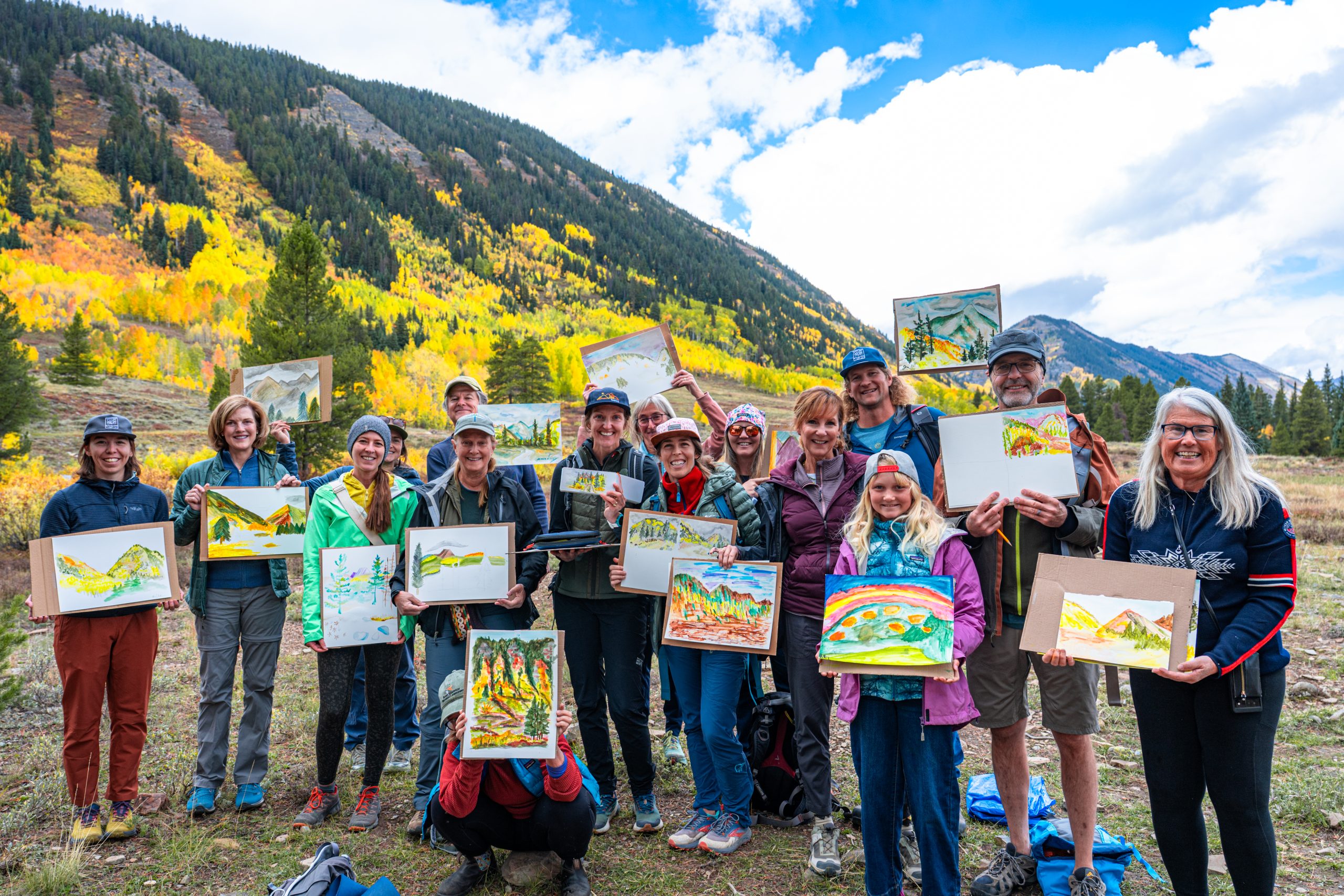
That people-first approach shows up in outreach as well. This summer, CBLT staff spent time at trailheads and river access points talking with users about safety, closures and stewardship. A new watercolor hike during CBLT Week invited people to connect with the land in quieter, creative ways. At the end of the hike, participants shared how they interact with CBLT land.
“It was really inspiring to hear other community members speaking on the ways that they like to use our spaces, not just as an active recreational space, but as a place to go relax and destress from your day and maybe slow down a little bit,” Charlebois said.
As recreation pressure continues to grow, CBLT sees its role as connector as much as caretaker. Trails like Lupine link town property, private easements, county roads, CBLT parcels and federal land into a single experience. Making that work requires constant coordination.
“The importance of partnerships is so clear,” Mugglestone said.
By combining conservation, data-driven recreation management and deep community engagement, the Crested Butte Land Trust is helping ensure the valley’s natural spaces remain resilient—able to support both the landscapes people love and the people who love them.