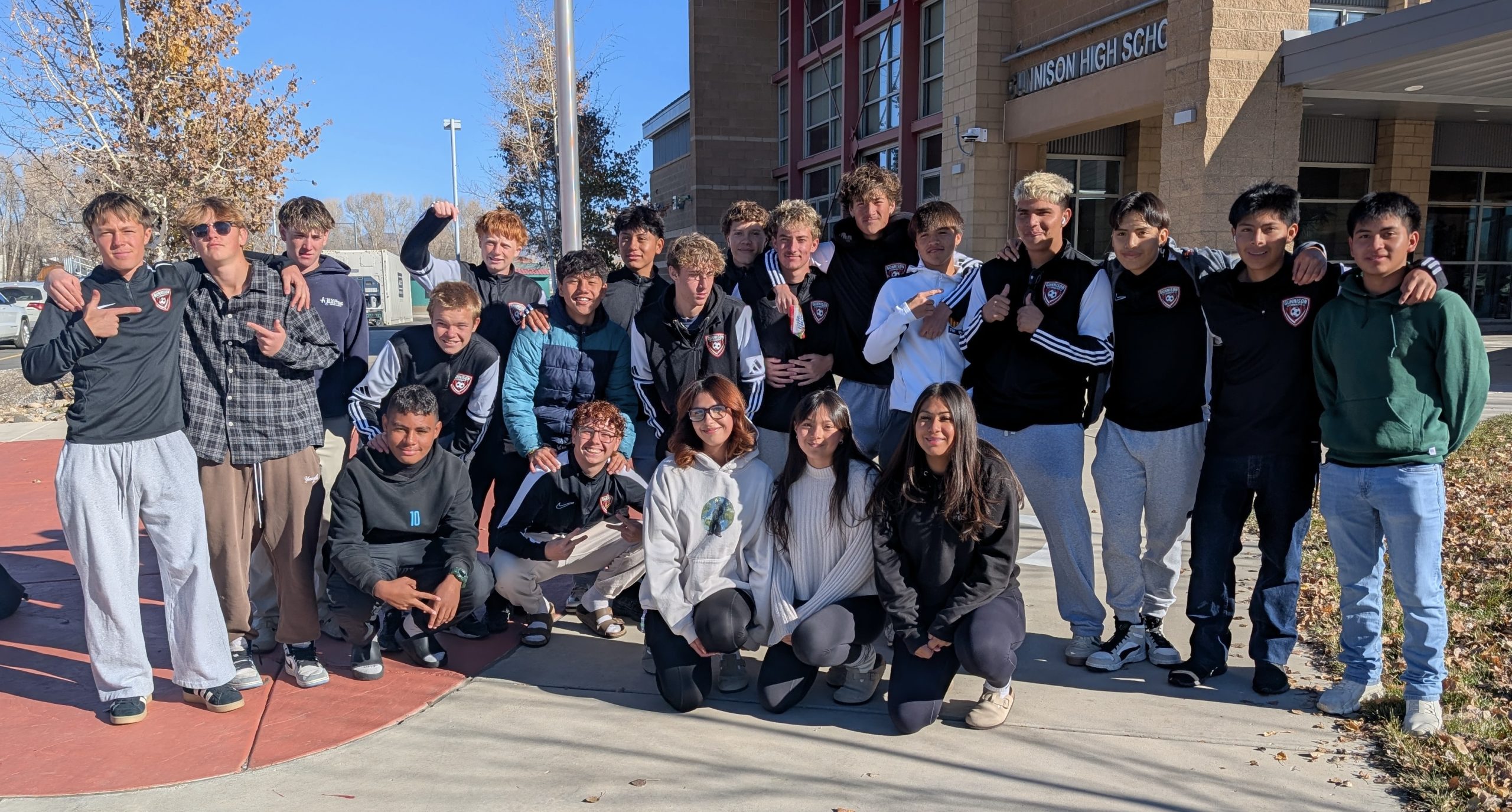
Photo courtesy of Gunnison High School.
Grantee spotlight: Gunnison High School Soccer
Building belonging through the beautiful game
Soccer is more than a sport at Gunnison High School, it’s a culturally relevant community that strengthens students’ connection to peers and school.
Assistant Principal and head coach Susan Powers, who has worked in the district for 25 years, saw the need for boys soccer, a sport that reflects the interests and backgrounds Gunnison students.
“We need to offer kids experiences that are important to them. If we want them involved, we need to offer what they like,” Powers said.
The program has been around for six years now, and about 36 students make up the combined varsity and junior varsity teams. Historically, two-thirds of players are English Language Learners and about half qualify for free or reduced lunch. For Powers, those figures reinforce the importance of offering something that resonates with students’ identities.
“With our demographic, having so many Latino kids and so many newcomer kids, we were looking for ways to really engage them in school more and offer an extracurricular that was culturally relevant,” she said.
The program builds community through shared knowledge and experience. Players develop collaboration skills, resilience and a mindset they can carry beyond the field: plan and prepare, perform in the moment and reflect afterward to improve.
That sense of belonging extends beyond the sidelines into the classroom. Students who feel connected to a team often feel more connected to school as a whole.
Powers intentionally built the program to reinforce that unity. Practices begin with varsity and JV training together before breaking into smaller groups. The teams travel together, cheer each other on and share coaching staff.
“I want all kids to feel like they’re part of it,” she said.
Year-round focus
While boys soccer season takes place in the fall, the program’s impact stretches across the entire year. Powers designed the Off-Season Training Project to keep her team engaged with the sport, one another and their academics.
“Sports are such a big motivator for kids to be eligible and to stay focused on school,” Powers said. “To have these events, to keep it in their mind that they have to work for these experiences has been really important.”
The project works, proven by higher grades and stronger school attendance.
“Any time you can get kids bought into something school-related, you see positive effects—grades, attendance, just their maturity and growth and their ability to interact with people,” she said.
Deepening community connections
Over summer break, the team hosts a soccer camp for preschoolers-middle schoolers. The high school students step into leadership roles as coaches for younger children.
“It’s really cool to see the high school kids in a different role,” Powers said. “They just have this whole other skill set that I’m not privy to in the rest of their days at school and on the field.”
Through the winter, the team welcomes the larger community into the school gym for Sunday night pickup games. The informal sessions draw a wide range of participants, including current players, team alumni, Western Colorado University students and adult community members. The games emphasize connection as much as competition. Approximately 40 people showed up to the first one, and a tournament held in conjunction boasted eight teams.
Travel traditions
Overnight opportunities also play a major role in maintaining team cohesion. Each year, players attend a winter indoor tournament in Pueblo, where multiple teams compete in a weekend of five-on-five games. The trip includes a phone-free team dinner designed to foster genuine connection.
“A lot of times, when we’re in season, you really start to feel that team connection, and it’s hard to find ways to maintain that throughout the year,” Powers said. “The Pueblo trip really keeps them connected and working together and just playing.”
The team also takes a preseason trip to the University of Denver for a weekend of training under a collegiate coach. In two days, the team has five practices and four games—plus a just-for-fun outing to a Colorado Rapids or Rockies game.
Together, these activities form a comprehensive offseason program engaging students year-round.
More than a game
At its core, the soccer program is about far more than wins and losses. It’s about creating a network of support where students can grow academically, socially and personally.
“That’s really what sports are for,” Powers said. “It’s a vehicle to develop character in young people and help them grow up.”